
What we do
KASA-Lab was founded with the mission to enhance scientific literacy of individuals and organisations by transforming complex, heterogeneous datasets and cutting-edge research about risk into insights that shape individual behaviour, community action, and public policy change for resilience.
KASA-Lab operates through three core pillars that complement, inform and inspire each other:
KASA-Analytics
Aggregates, curates, and makes sense of existing data and analysis, identifies gaps in knowledge critical for behavioural change and action, and generates new insights from original, cutting-edge research.
KASA-Interactive
Pushes the boundaries of science communication to provide immersive experiences for interactive learning and a more profound understanding of risk and future pathways.
KASA-Collective
Brings together scientists, local and global decision-makers, artists and enterprises in collaborative partnerships on time-bound initiatives for change.
Ongoing and planned projects
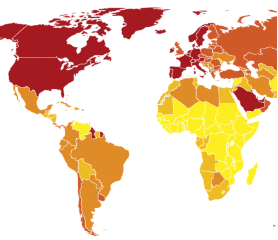
New methods in risk science: uncovering how inequality drives disaster risk
How does wealth inequality shape disaster and climate risk?
We explore the storyline approach, used successfully to bridge probabilistic risk models with local decision-making needs, to unpack how the increasing concentration of wealth drives risk in hazard-prone cities and climate-vulnerable food producing areas. We bring together leading physical and social scientists, practitioners and policy-makers to co-design the framework and trial it in 2026 and 2027.
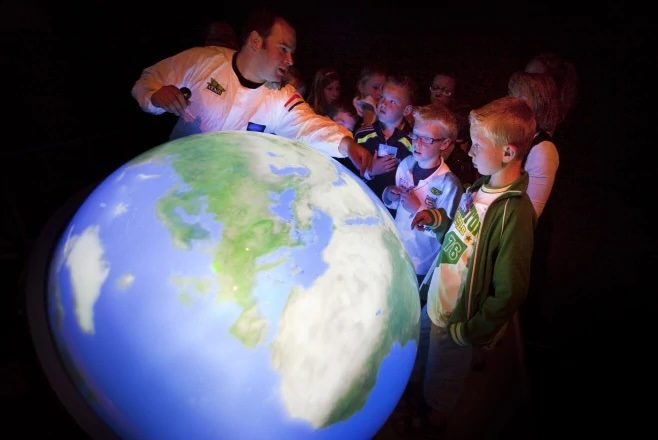
Innovation meets Interaction: Science for disaster resilience
Science communication through events, museums, and education bridges research and society, empowering decision-makers and inspiring future generations. As disasters intensify due to climate change and urbanization, engaging the public and policymakers with clear, actionable knowledge is key to building resilience and informing policy.
In collaboration with Japan’s Earth Literacy Program and their Tangible Earth/Sphere projects, we aim to leverage those immersive tools to translate complex information into accessible stories, in Switzerland and across Europe.
Breaking the boundaries of science communication: the Riskscapes Magazine
We are constantly developing new ways of communicating risk science. Our upcoming multi-lingual, open-access and fully online publication will open new ways of understanding disaster risk and climate change impacts through bridging art and science.
Get in touch if you are interested in joining the editorial board, submitting content, or supporting the magazine through financial contributions.
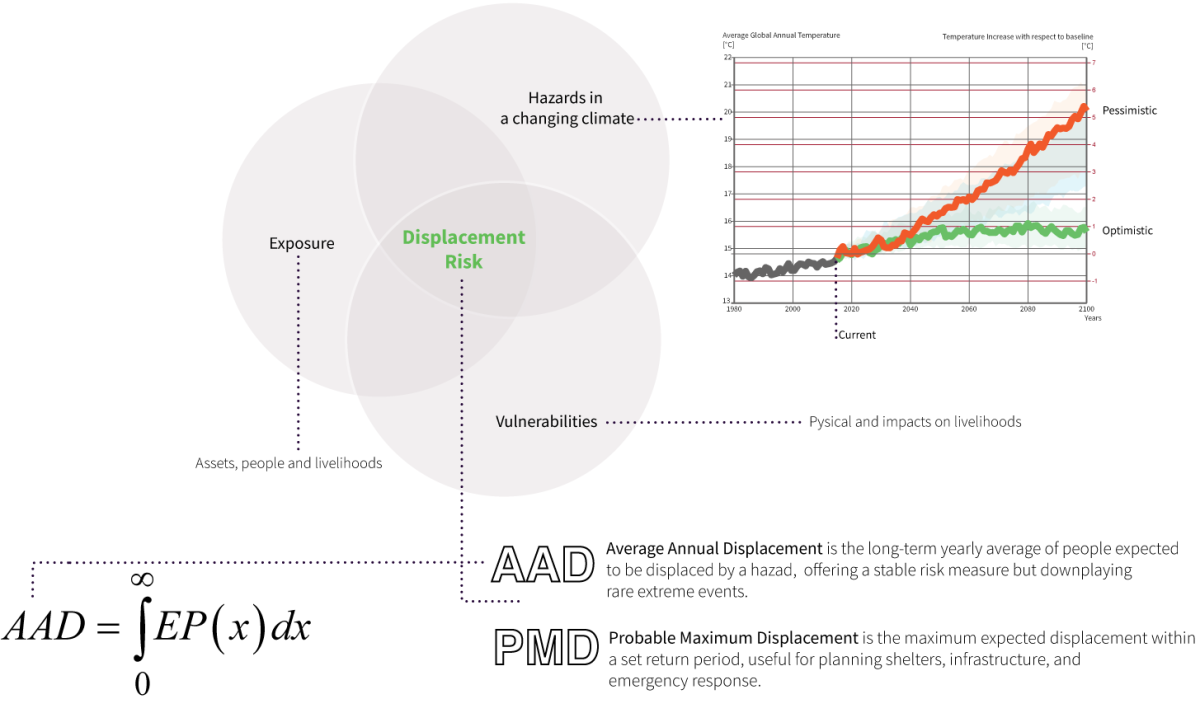
Assessing future disaster displacement risk
Geophysical and weather-related hazards are driving unprecedented population displacement.
Quantifying this risk in a changing climate is critical for shaping adaptation and disaster risk reduction strategies, policy development, and climate negotiations.
Through a collaborative consortium including the United Nations University, CIMA Foundation, ETH Zurich, and other partners, our unified outputs enable holistic risk comparisons, providing evidence-based support for policy discussions.
Get in touch if you are interested about this project.

Pushing back on simple narratives: new research into scientific and policy discourse
The climatization of disaster risk reduction agendas and development debates offers a convenient shorthand for complex realities, linking local and global issues through simplified narratives. However, it also embodies and reproduces power relations between scientific disciplines, global and local actors, and wealthy and poorer regions.
Through historical and anthropological studies we reveal how these terms can further serve political and economic interests by framing development challenges mainly through a climatic lens, obscuring deeper structural causes of inequality and crisis. Get in touch if you would like to contribute to this ongoing research or want to know more.
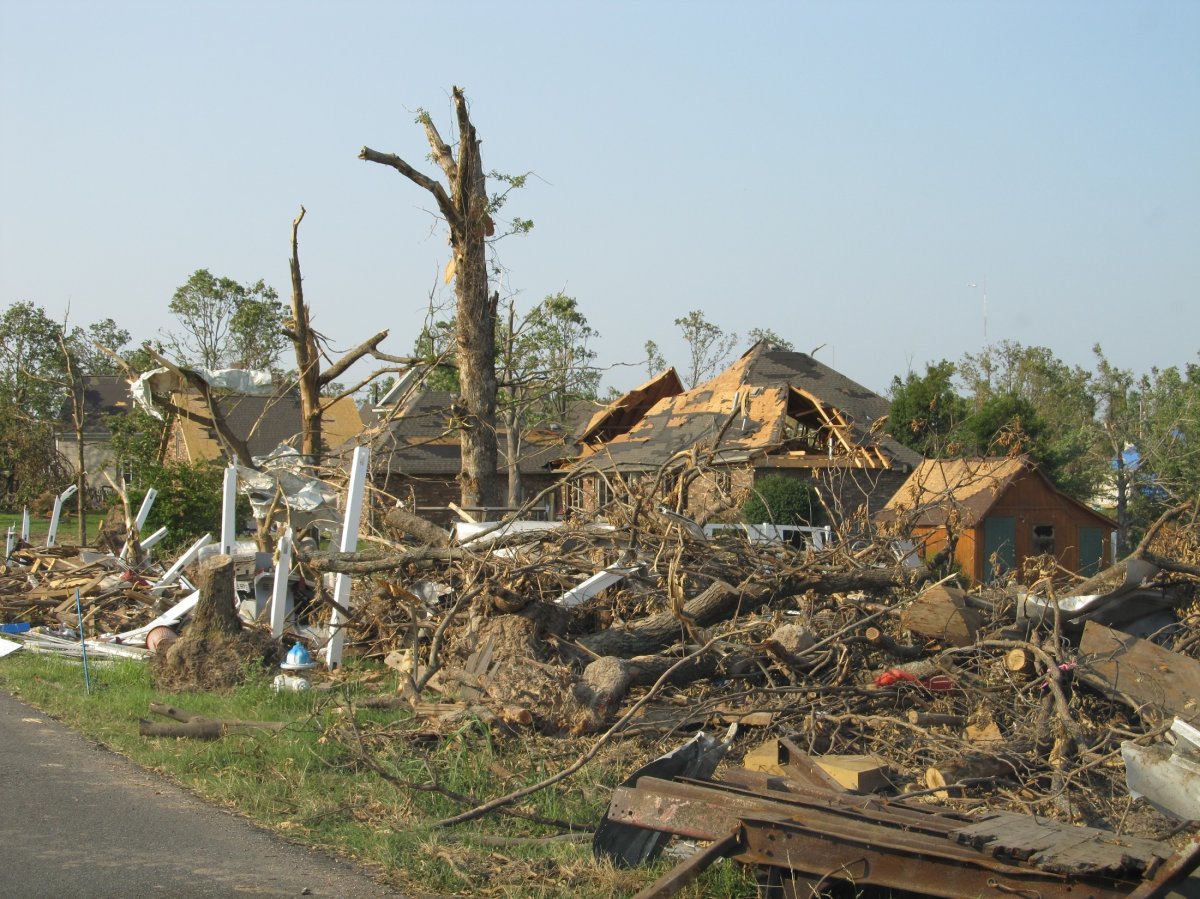
Unpacking the implications of housing destruction by disasters
This project aims to uncover the true scope and scale of housing destruction caused by disasters worldwide and analyze its implications for disaster risk reduction and sustainable development agendas, both now and beyond 2030. To achieve this, we will develop a globally comparable dataset on housing destruction, complementing existing sources with additional reliable data.
We will also analyze geographical, temporal, and hazard-specific patterns of destruction, examine the implications of housing reconstruction by housing type and income group across countries, and assess the monetary and human costs, including displacement, reconstruction, and sustainable returns.
Get in touch if you are interested about this project.
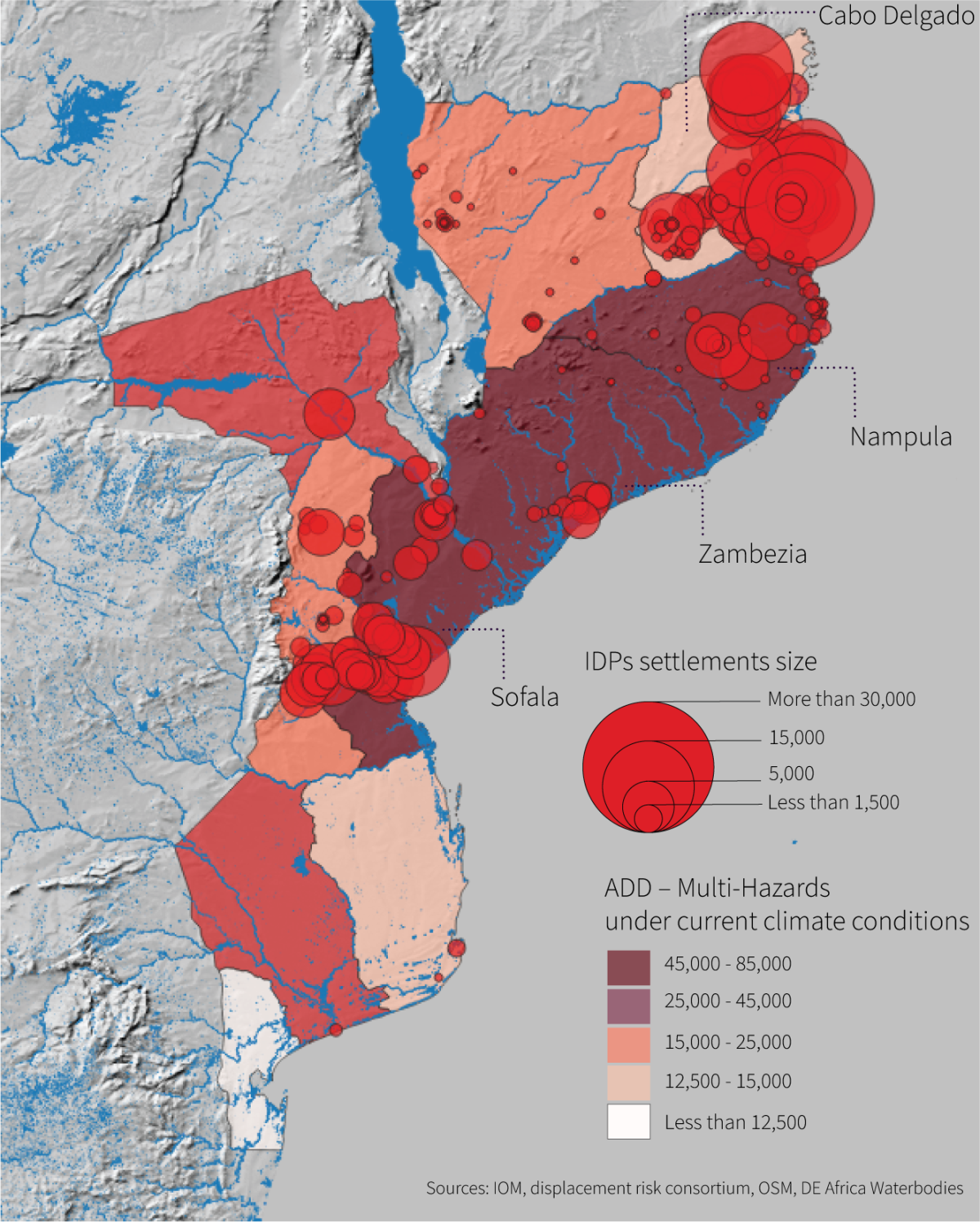
Revealing disaster displacement risk at national and sub-national levels
In collaboration with UN agencies and other partners, we have developed country profiles analysing disaster displacement risk at national and sub-national levels.
By overlaying displacement risk data with other relevant information such as displacement camps, educational centres, river basins and urban settlements, we have identified hotspots where to invest and act on anticipatory action, early warning and risk reduction.
By applying climate change scenarios, we have also shed a light on the areas and populations which will be most vulnerable to the impacts of climate change
Get in touch if you are interested about this project.
Featured work
We transform complex ideas into actionable solutions, bridging gaps between research, technology, and real-world impact.
Our past projects reflect a commitment to innovation, collaboration, and creating meaningful change across diverse fields.
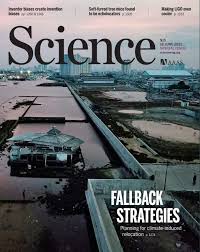
State-of-the-art science publications
Science magazine featured our work in a podcast and article examining the economic impacts of population displacement in a changing climate. We produced new analysis revealing the substantial human, social, and economic costs of displacement that remain largely invisible, hindering effective action.
We then shared these findings through concrete case studies in podcasts, webinars, conferences, and closed‑door policy briefings
Global Assessment Report on DRR
We played a key role in the production, analysis, and writing of the Global Assessment Report (GAR), the flagship report of the United Nations on worldwide efforts to reduce disaster risk.
The GAR series compiles and analyzes data on disaster risk patterns, trends, government self-assessments, and critical challenges in disaster risk reduction. Individually and collectively, we contributed to all editions from 2009 to 2017.
Global Report on Internal Displacement
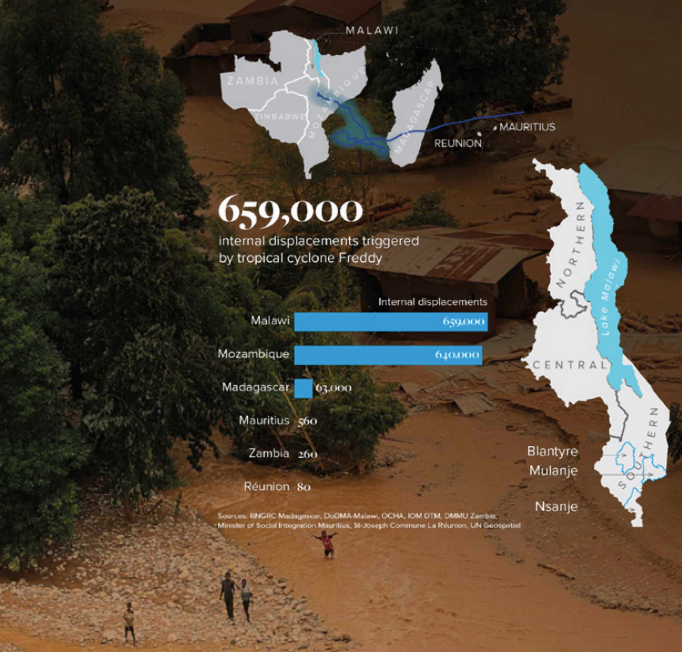
From 2017 to 2025, we led the end-to-end production of the Internal Displacement Monitoring Centre’s (IDMC) flagship Global Report on Internal Displacement (GRID), its regional reports and country profiles.
Grounded in an approach of co-production, partnership and multidisciplinarity, we transformed complex data and insights into actionable knowledge through rigorous research, data visualisation and compelling storytelling. These agenda-setting publications helped informing donor priorities,shape global policies and empower stakeholders supporting some of the world’s most vulnerable communities.
Disaster displacement in a changing climate
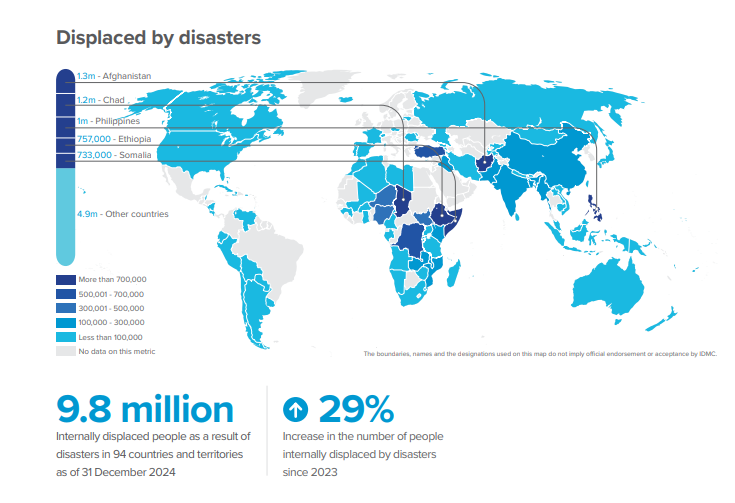
At IDMC, we have pioneered new methodologies to track disaster displacement, capturing not only large-scale events but also smaller, often overlooked crises.
Our work has enhanced understanding of displacement by analyzing its duration, impact on lives, and broader consequences. We have led the development an innovative information system to track displacement across multiple dimensions—temporal, spatial, and magnitude—providing deeper insights into how disasters in a changing climate reshape human mobility.
Through this approach, we have brought analysis of disaster displacement data into another level.
Sendai Framework indicators and
DRR terminology
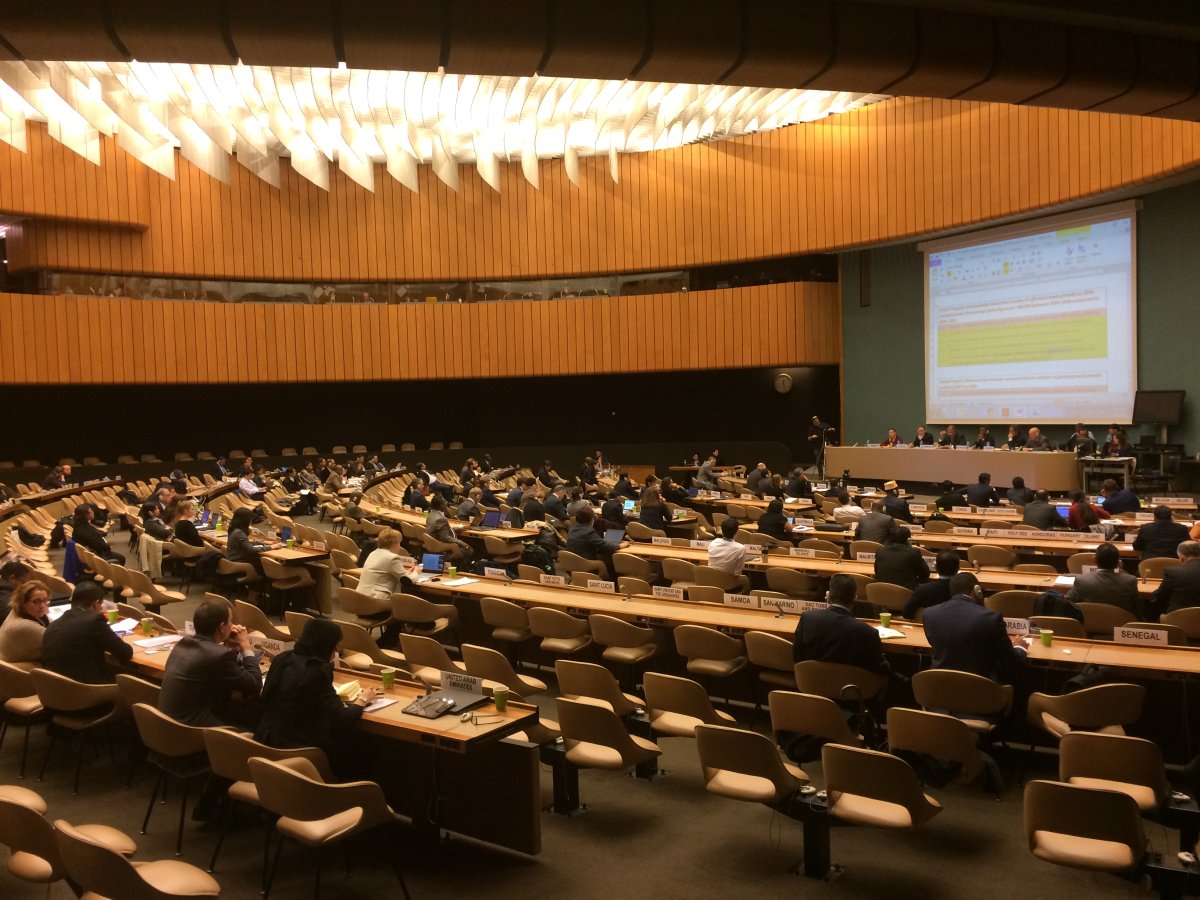
We have contributed to shaping global disaster‑risk monitoring standards. This includes supporting the UN’s Open‑ended Intergovernmental Expert Working Group (OIEWG) in developing the policy indicators that underpin the Sendai Framework for Disaster Risk Reduction (2015–2030), and co‑authoring one of the key background publications informing this process.
Today, countries report against 38 indicators to track progress in reducing disaster risk by 2030.
Amplifying risk science in low-income countries
More southern-led, policy-relevant research on the evolving impacts of climate change is needed as currently science in this domain is heavily dominated by individuals and institutions in high-income countries.
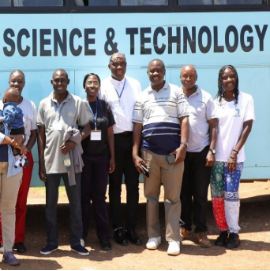
With CGIAR, we built a mentorship programme to address this challenge head on: the Africa Climate Mobility Academy supporting early career researchers and African scientists in academic writing and publication.

Inputs to major UN flagship publications and processes
We have contributed background papers and technical inputs to several major UN and international publications, including WMO’s State of the Global Climate report, FAO’s The Impact of Disasters on Agriculture and Food Security, FSIN’s Global Report on Food Crises, UNHCR’s No Escape and its flagship Global Trends reports, and UNICEF’s Children Displaced in a Changing Climate.
These contributions have helped strengthen the evidence base informing global policy on disaster risk, food security, displacement, and climate impacts.
Shaping disaster loss and damage tracking systems
We have long been at the forefront of improving disaster loss, damage, and displacement data systems.
Our work includes strengthening national DesInventar loss‑data systems in more than 20 countries, pioneering IDMC’s multidimensional approach to tracking disaster‑related displacement, and contributing to global methodological standards as members of the EM‑DAT/CRED Scientific and Technical Advisory Group (STAG) and GLIDE.